

 Book Service!
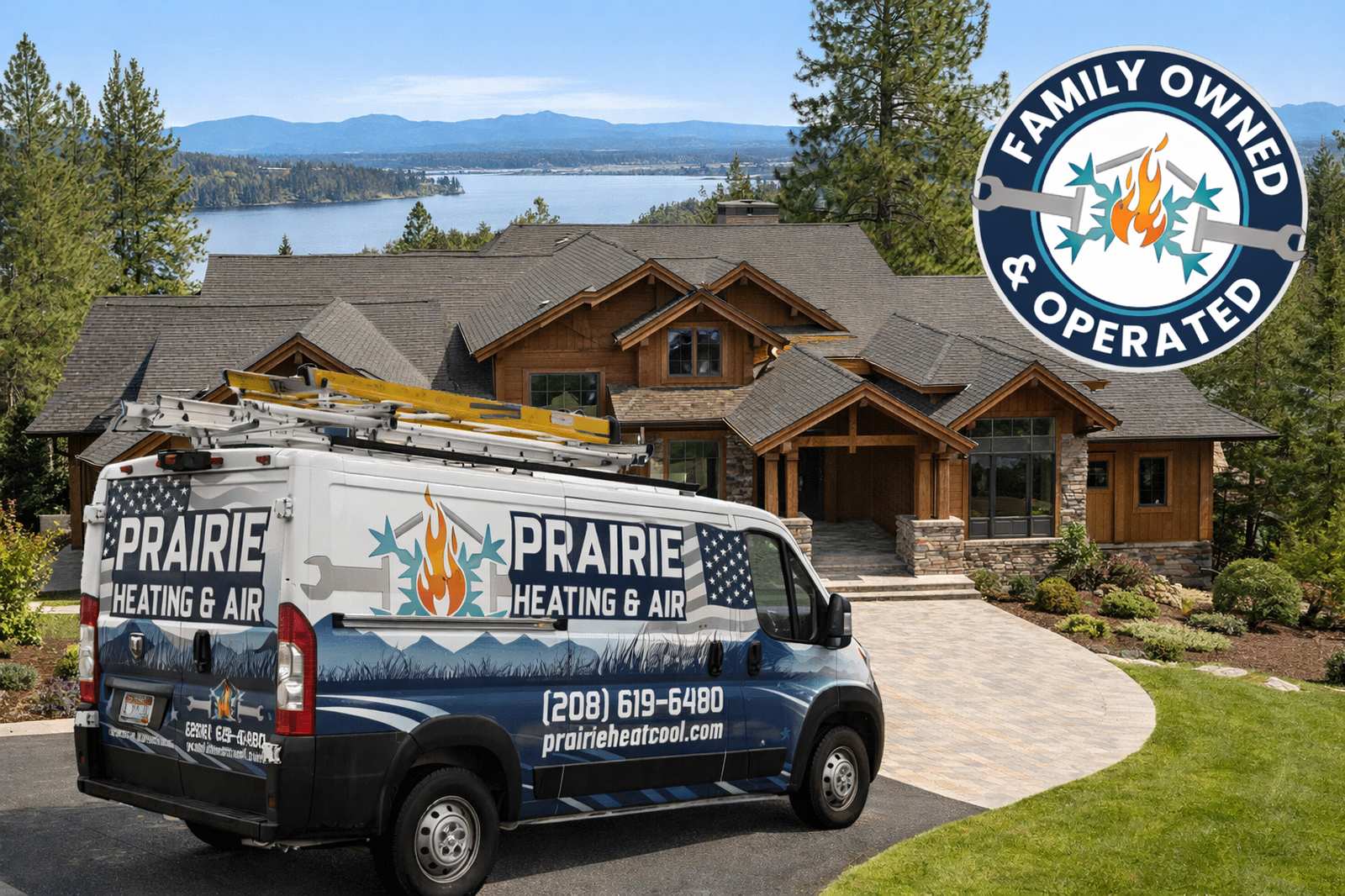
When you’re picking out tile and countertops for your new Coeur d’Alene home, the last thing on your mind is “static pressure” or “energy efficiency.” However, the decisions made during the Rough-In Phase of your construction will dictate your comfort (and your utility bills) from your furnace and AC system for the next 20 years.
With freezing winters, dry shoulder seasons, and hot summer spikes, homes in the greater Inland Northwest demand more than rule-of-thumb sizing. They require engineered airflow, accurate load calculations, and intentional system design.
If you’re building new, this is your one opportunity to get it right.
The North Idaho Climate Isn’t Average — So Your HVAC Shouldn’t Be Either
Homes cross the Inland Northwest experience:
-
Sub-zero winter temperatures
-
Shoulder seasons with wide temperature swings
-
Increasing summer heat waves
-
Low humidity in winter
This creates a heating-dominant climate with cooling peaks. A combination that punishes oversized or poorly designed systems.
A “one ton per 500 square feet” rule doesn’t account for:
-
Window orientation toward the Idaho sun
-
Cathedral ceilings vs. standard ceilings
-
Spray foam vs. fiberglass insulation
-
Air sealing quality
-
Basement vs. slab foundation
-
Attached garages
-
Multi-story stack effect
The result? Homes that are technically new but uncomfortable.
What Is a Manual J and Why It’s Non-Negotiable
A professional HVAC design starts with a ACCA approved load calculation known as a Manual J.
This isn’t a guess. It’s a room-by-room heat gain and heat loss analysis.
A proper Manual J evaluates:
-
R-values of walls, ceilings, and floors
-
U-factor and SHGC of windows
-
Infiltration rates
-
Duct location (conditioned vs. unconditioned space)
-
Occupancy assumptions
-
Local design temperatures for North Idaho
Why this matters:
-
Oversized systems short cycle, reducing lifespan and comfort.
-
Undersized systems struggle during peak winter cold snaps.
-
Incorrect sizing drives up utility costs for decades.
A custom HVAC design ensures your furnace or heat pump is selected based on your home’s physics, not square footage.
Manual D: Designing the Veins of Your Home
Ductwork is not just “metal tubes in the attic.”
It is a pressure-balanced delivery system.
A Manual D duct design calculates:
-
Proper duct diameters
-
Total external static pressure
-
Friction rate
-
Register placement
-
Return air strategy
Poor duct design causes:
-
Hot and cold rooms
-
Noisy airflow
-
Excess static pressure
-
Premature blower motor failure
-
Reduced system efficiency
New construction gives you a once-in-a-build opportunity to route ducts properly, with correct trunk sizing and return placement, before drywall locks everything in place.
Retrofits are expensive. Design-phase precision is not.
Why “Builder Grade” HVAC Often Misses the Mark
Many production builders prioritize:
-
Lowest upfront equipment cost
-
Speed of installation
-
Minimal design time
What that often means:
-
No Manual J
-
No Manual D
-
Oversized furnace “just to be safe”
-
Single return systems in multi-story homes
The homeowner inherits:
-
Uneven temperatures
-
High gas and electric bills
-
Shortened equipment lifespan
-
Poor humidity control
A custom HVAC partner works alongside your builder, not against them, to ensure performance matches the investment you’re making in the home itself.
Heat Pumps vs. Furnaces in North Idaho
Homeowners frequently ask:
“Should I install a heat pump in the Inland Northwest?”
Modern cold-climate heat pumps perform far better than older models, but system selection must align with:
-
Winter design temperatures
-
Electrical capacity
-
Utility rates
-
Backup heat strategy
In many new homes, a dual-fuel configuration (heat pump + gas furnace) offers:
-
High efficiency during mild seasons
-
Reliable heat during sub-zero events
-
Optimized operating costs
This decision should be made during planning, not after drywall.
Smart Zoning: Design It Now or Pay Later
Two-story homes in Coeur d’Alene commonly struggle with:
-
Overheated upper floors in summer
-
Cold main floors in winter
-
Thermostat battles
Zoned HVAC systems use motorized dampers and multiple thermostats to regulate airflow by area.
Installing zoning during framing:
-
Costs significantly less
-
Requires no finished-wall modifications
-
Integrates cleanly into duct design
Retrofitting later means opening ceilings and reworking duct trunks.
If you’re building new, zoning should be evaluated, not treated as an upgrade afterthought.
Indoor Air Quality: The Dry Idaho Factor
North Idaho winters are dry. Extremely dry.
Low humidity can cause:
-
Static electricity
-
Cracked wood floors
-
Respiratory irritation
-
Poor sleep
New construction is the ideal time to integrate:
-
Whole-home humidifiers
-
High-MERV filtration
-
ERV/HRV ventilation systems
-
Blower ionization technology
When designed from the start, IAQ becomes seamless , not patchwork.
Protecting Your Investment During Construction
Construction dust is not harmless.
If furnaces are operated during drywall sanding without proper protection:
-
Heat exchangers can become contaminated
-
Blower wheels collect debris
-
Filters clog immediately
-
Duct systems accumulate particulates
A disciplined new-construction HVAC process includes:
-
Equipment shielding
-
Temporary filtration
-
Post-construction duct cleaning (if required)
-
Startup commissioning
Commissioning verifies airflow, refrigerant charge, gas pressure, and static readings before homeowner occupancy.
This is where performance becomes measurable, not assumed.
The 20-Year Decision You’re Making Right Now
HVAC systems typically last 15–20 years.
The decisions made during framing will influence:
-
Utility costs
-
Comfort consistency
-
Equipment lifespan
-
Indoor air quality
-
Resale value
This isn’t about upgrading to the most expensive unit.
It’s about engineering the right system for your specific home in the Inland Northwest climate.
Design Your Comfort From the Ground Up
If you’re planning a new build in Coeur d’Alene or surrounding North Idaho communities, this is your window to get HVAC right the first time.
- Custom load calculations.
- Precision duct design.
- Climate-appropriate equipment selection.
- Commissioned performance.
Don’t leave 20 years of comfort to a rule of thumb.
Consult with a new construction HVAC specialist, like Prairie Heaeting and Air, before your rough-in phase begins, when changes are easy, and performance is still in your control.
Call 208-619-6480 for a free consulutation or contact us online with any questions.