
 Book Service!
The Inland Northwest Homeowner’s Guide to Air Filters
Living in the Inland Northwest, our HVAC filter systems are the unsung heroes of our homes. From -10°F January mornings in Coeur d’Alene to 100°F July afternoons in Spokane, your furnace and AC units work overtime.
Direction, MERV, and Wildfire Prep
The simplest way to protect that expensive equipment, and your family’s lungs, is by installing your HVAC filter correctly. But in our region, “correctly” involves more than just pointing an arrow; it’s about choosing the right filter for our unique climate.
1. The Golden Rule: Follow the Arrow
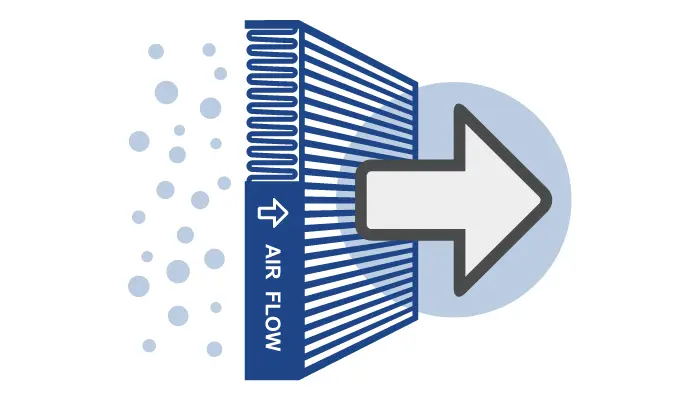
Whether you have a vertical furnace in a North Idaho basement or a horizontal unit in a crawlspace, every filter has an “Air Flow” arrow.
-
The Direction: The arrow must always point toward the furnace/air handler and away from the return duct (where the “dirty” air comes from).
-
Why it matters here: In our dusty summers and “pollen seasons,” a backwards filter collapses more easily. This can lead to a “no-heat” call in the middle of a February freeze which is an expensive mistake when emergency HVAC rates apply.
2. Choosing the Right MERV Rating for the Inland Northwest
Not all filters are created equal. In the Inland Northwest, we recommend different ratings based on the season:
-
Standard Seasons (MERV 8-11): This is the “sweet spot” for most local homes. It captures dust, pet dander, and carpet fibers without straining your blower motor.
-
Wildfire Season (MERV 13): When the “AQI” (Air Quality Index) starts climbing in August due to regional forest fires, a MERV 13 filter is your best defense. It is dense enough to capture the fine particulate matter (PM2.5) found in wood smoke.
Prairie Heating & Air Pro-Tip: Don’t run a MERV 13 year-round unless your HVAC system is specifically rated for it, as it can restrict airflow and cause your system to “ice up” or overheat.
3. The “Inversion” Factor: Winter Air Quality
In the Inland Northwest, we often experience winter inversions, where stagnant cold air traps wood smoke and pollutants low to the ground.
-
During an inversion, check your filter every 30 days. You’d be surprised how much “neighborhood chimney smoke” your filter pulls out of the air even when it’s freezing outside.
4. How to Install Your Filter in 4 Steps
-
Turn off the power: Safety first at the thermostat or the furnace switch.
-
Locate the slot: Most local homes have the slot where the large return duct meets the furnace.
-
Check the old filter: Is it gray or furry? If you can’t see light through it, it’s past due and should be replaced.
-
Slide in the new one: Ensure the arrow points toward the unit. If it’s a tight fit, don’t force it. Bent filters allow “blow-by,” letting dust coat your sensitive (and expensive) coils.
5. Local Maintenance Frequency
-
Summer/Winter (Peak Use): Check every 30 days; replace every 60-90.
-
Wildfire Season: Check every 2 weeks. If you can smell smoke inside, your filter is likely working overtime and may need a mid-month swap.
-
Spring/Fall (Shoulder Seasons): This is the best time to schedule your professional tune-up with a local hearing and air conditioning technician to ensure your blower motor hasn’t been stressed by a dirty filter.
Don’t Let a $15 HVAC Filter Break a $10,000 System
In North Idaho and Spokane, WA our HVAC systems are vital for survival. A clean, correctly installed filter ensures your home stays a sanctuary. No matter what the Inland Northwest weather (or smoke) throws at us.
Get Your No Charge Service Call
Call Prairie Heating & Air at 208-619-6480 for a No Charge Service Call to help determine if you can improve your indoor air quality or contact us online with any questions.
Related Information