
 Book Service!
Inland Northwest Natural Gas Safety: What Every Homeowner Needs to Know
Living in North Idaho means experiencing the full spectrum of extreme weather. We rely heavily on natural gas, which is an incredibly efficient and cost-effective fuel source, to power our furnaces through sub-zero winter nights and fire up our grills for summer holidays.
But because natural gas is a volatile utility, the integrity of your home’s piping system isn’t just a matter of efficiency; it is the single most critical safety feature in your house.
Whether you are buying an older home in Rathdrum, finishing a basement in Coeur d’Alene, or simply upgrading your kitchen range in Spokane, WA, here is what you need to know about the science and safety of the gas lines hiding behind your walls.
The Science of Proper Sizing – Your Home’s BTU Load
One of the most common, and dangerous, mistakes we see in DIY or cut-rate gas work is improper pipe sizing.
Every gas appliance in your home has a specific BTU (British Thermal Unit) requirement. If your gas lines are undersized, your furnace, stove, or water heater will quite literally be starved for fuel. This leads to inefficient combustion, poor performance, and potential equipment damage that can drastically shorten the lifespan of your expensive appliances.
Professional heating installers calculate your home’s Total Connected Load. This mathematical formula ensures your piping system has the exact volume it needs to run every appliance safely and efficiently at the same time.
Hidden Risks: Corrosion and Connectivity
Our regional climate can be tough on homes, and aging gas lines are often subject to atmospheric corrosion. Over time, wear and tear can compromise both rigid piping and the flexible connectors running to your appliances.
Modern safety standards are incredibly strict for a reason. For example, did you know your system likely requires specific Sediment Traps (often called “drip legs”)?
This small gas line detail catches moisture and debris before it can enter your appliance’s gas valve. It seems like a minor feature, but missing a drip leg can result in a multi-thousand-dollar repair if debris ruins your furnace valve.
The Importance of Pressure Testing & Permitting
In local municipalities like Post Falls, gas work isn’t just about screwing pipes together and hoping for the best. It requires rigorous, documented safety checks.
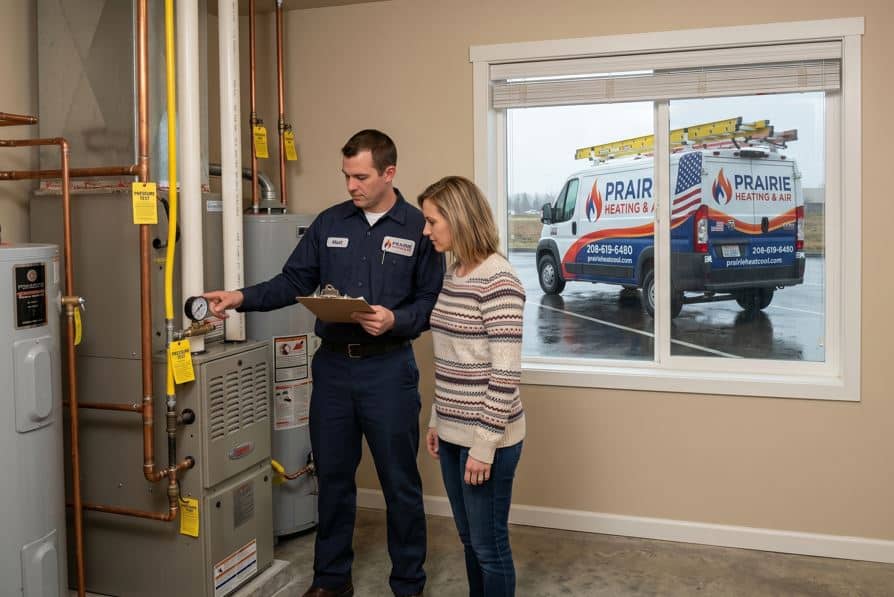
When a professional works on your gas lines, they perform a comprehensive Pressure Test. By capping and pressurizing the system, then monitoring it with a highly sensitive gauge, we can detect microscopic leaks that the old-school soapy water test easily misses.
Furthermore, professional gas line installation means coordinating with local utilities like Avista. Priairie Haeting & Air ensures every installation is legally permitted, inspected, and documented for your home’s permanent record. Protecting both your family and your property value.
When to Call the Pros at Prairie Heating & Air
Natural gas is naturally colorless and odorless, so utility companies add a chemical called Mercaptan to it. This gives the gas that distinct rotten egg smell.
If you ever smell this odor in your home, or if you hear a faint hissing sound near a gas appliance, do not investigate it yourself. Do not flip any light switches or use your cell phone inside. Exit the home immediately and call a licensed specialist or your utility provider.
Safety Isn’t a DIY Project
When it comes to the volatile utilities powering your home, peace of mind is priceless. Whether you’re upgrading to a new gas range, installing an outdoor fire pit, or need a whole-home safety inspection on an older property, you need a team that does the job right, by the book, every single time.
Trust the certified pros at Prairie Heating & Air to protect your home and your family.
Whether you’re upgrading to a gas range or need a whole-home safety inspection, trust the certified pros at Prairie Heating & Air. We do the job right, by the book, every time.
Learn more about our professional gas line services here or call 208-619-6480 to schedule your gas line inspection or home heating service. Or if you have any additional questions contact us online.
We offer No Charge Service Calls that no other compnay in the area offers!